
Protecting Your Peace: Why Setting Boundaries Matters (Yes, Even With Family)
- Amy Sampsell - Reader & Spiritual Practitioner

- Apr 29
- 5 min read
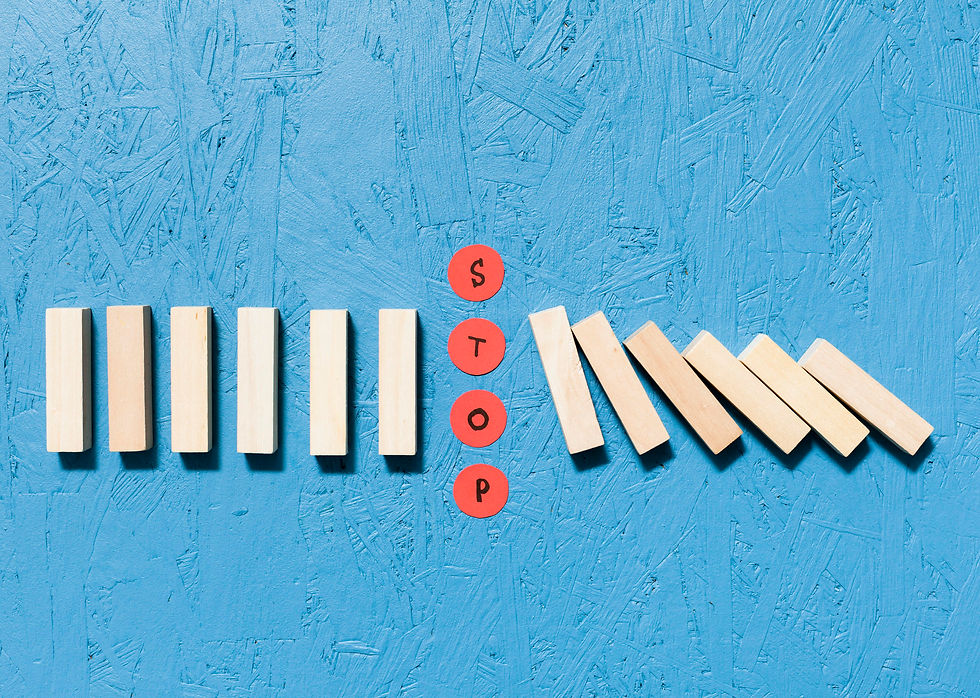
A difficult topic to bring up, but let’s be honest and real—setting boundaries are needed and they can feel really uncomfortable at first.
Most of us were raised to be polite, to keep the peace, to not rock the boat. So when we start thinking about saying “no,” speaking up, or stepping back from people who drain us… it can bring up a lot of guilt.
But here’s the truth: protecting your peace isn’t selfish—it’s necessary.
And sometimes, the boundaries we need most are with the people closest to us.
** Before I go further, I would like to divert a bit with the term 'selfish' and why I am not a fan of the negative connotations that are used with it.
The word “selfish” has been shaped to sound like something we should avoid at all costs, when in reality, it’s not that simple.
At its core, being “selfish” just means prioritizing yourself., and that, on its own, is not a bad thing.
Somewhere along the way, many of us were taught that putting ourselves first is wrong; that it means we’re inconsiderate, uncaring, or difficult. But the truth is, there’s a big difference between harmful selfishness and healthy self-prioritization.
Let me break it down a bit:
Healthy “selfishness” looks like:
Taking care of your mental and emotional well-being
Setting boundaries without guilt
Saying no when something doesn’t feel right
Making choices that align with your values and needs
That’s not harmful—that’s responsible.
You can’t pour into others if you’re constantly running on empty. When you ignore your own needs for too long, it often leads to burnout, resentment, and disconnection. In that sense, never being “selfish” can actually create more harm over time.
The negative version of selfishness, (the one people usually mean) is when someone disregards others completely, lacks empathy, or takes without giving. But that’s not what most people are doing when they start setting boundaries or choosing themselves.
Re-framing the word can be powerful
What if instead of hearing “selfish” as an insult, you heard it as:
“I’m taking care of myself.”
“I’m honoring my limits.”
“I’m choosing what’s healthy for me.”
Because that’s what it often really means.
Here’s the truth of it --- You are allowed to matter in your own life.
Taking care of yourself doesn’t make you a bad person, it makes you a balanced one!
And when you’re grounded, supported, and whole, you actually have more to give to others in a genuine, meaningful way.
So maybe the goal isn’t to avoid being “selfish” altogether—maybe it’s to redefine it into something that includes you, too.
Okay, now that has been cleared up, let's get back to the blog post ---
So… What Are Boundaries, Really?
Boundaries are just clear, honest limits that protect your time, energy, and emotional well-being.
They can be as simple as:
“I can’t talk about this right now.”
“That comment didn’t sit right with me.”
“I need some time to myself.”
Again, they’re not about shutting people out or being cold—they’re about showing others (and yourself) what you’re okay with and what you’re not; which is actually very healthy!
Why You Really Need Boundaries
If you’ve ever felt drained after a conversation, overwhelmed by always saying yes and then regretting saying yes? Or have you been quietly hurt by someone’s words or their actions? Well, that’s usually a sign a boundary is needed.
When you don’t set boundaries, you might:
Say yes when you actually want to say no
Feel resentful or exhausted
Let things slide that honestly don’t feel okay
And over time, that stuff builds up.
Setting boundaries helps you:
Protect your energy
Feel more confident and in control
Build healthier, more honest relationships
Actually show up as your real self (not a burnt-out version of you)
YOU DESERVE THAT!!!!!
Let’s Talk About the Hard Part: Family
Oh Yeah! This is where things get really tricky!
Why does it get tricky with family you may wonder, well simply put, there’s history. Maybe there's expectations, maybe you have always been the 'go -to' person or the 'mediator' in your family. Maybe there's guilt, or shame, or a myriad of other emotions that go through your mind. Essentially it boils down to that feeling of “but I have to deal with this, right?”
Not exactly.
Ready for a cold hard truth?
Just because someone is family doesn’t mean they get unlimited access to your energy, your time or your emotions—especially if they make you feel bad about yourself by manipulating you!
If a family member constantly criticizes you, dismisses your feelings, or leaves you feeling drained, it’s absolutely okay to take a step back, re-evaluate and put up a boundary. Here's a hint, if they don't respect you, your time or your energy, will you respect these things for yourself?
You can love your family and have boundaries. Both can exist at the same time.
And it might look like:
Changing the subject when conversations get negative
Spending less time around certain people
Saying “I’m not okay with that” and meaning it
Walking away from conversations that cross the line
What About the feeling of Guilt when you put up a boundary?
Ah that wonderful tug-of-war that happens within you---- the guilt.
Not going to lie here, it’s probably going to show up, and at first very strongly. You might even feel like you’re being mean, dramatic, or “too much.”
Well, guess what? You are not.
You’re learning to take care of yourself, and that’s not only a good thing, its also very healthy!
And yes, something to keep in mind: people who are used to you not having boundaries might not love it when you start setting them; they might try to manipulate the situation, guilt-trip you, be mad and not talk to you, etc.
** If any of that happens, remember that setting, and keeping your boundaries is wrong, it just means things are changing and the other people are not going to like the changes. But again, so what on them! Its your life, your energy, your feelings that are on the line here, not theirs. YOU are just as important in this life!
How to Start (Without Overthinking It or Overwhelming Yourself)
You don’t have to flip your whole life upside down overnight, the idea is to start small.
Such as:
Noticing what feels off or draining
Pause and think before automatically saying yes
Keep your boundaries simple and clear
Stick to them—BE CONSISTENT - even if it feels awkward at first
The more you practice, the easier it gets. Promise.
Choosing Yourself Is a Good Thing
At the end of the day, setting boundaries is really just choosing yourself.
It’s saying:“My feelings matter.”“My energy matters.”“I matter.”
And that includes when it’s hard and yes, even when it’s family.
The Bottom Line
The takeaway ---- Life feels a lot lighter when you stop carrying things that were never yours to hold.
When you start setting boundaries, you might notice:
More peace
Less stress
Better relationships (the real ones will adjust and grow with you)
You’re allowed to protect your peace, you’re allowed to take up space, you’re allowed to walk away from what doesn’t feel good to you.
And the more you honor that, the more your life starts to feel like your own again.


Comments